Foundation installation
Full foundation installation for new construction projects, including slab, raised, and complex multi-type foundations built to California seismic standards.
Learn more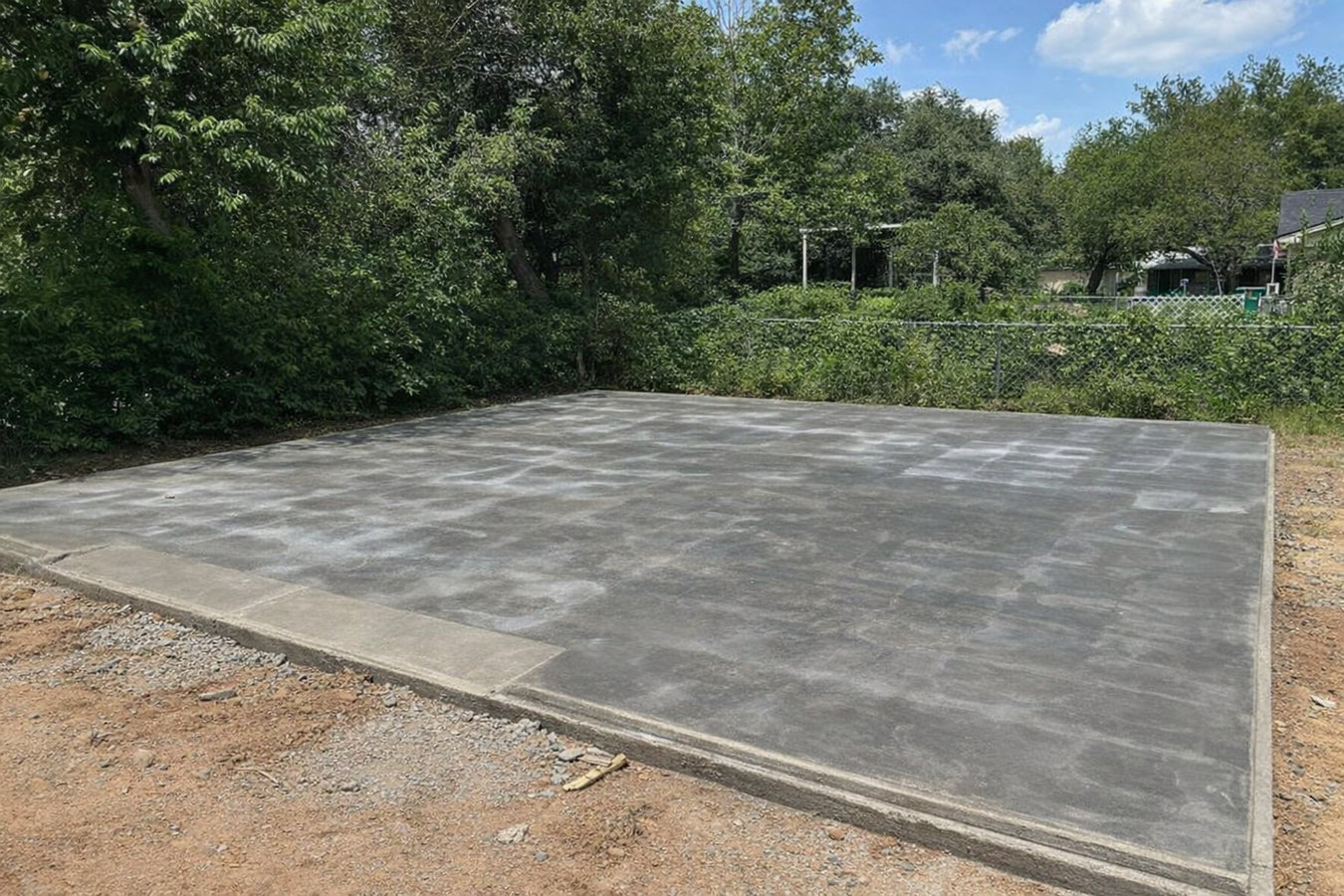
Building on Merced's clay soil without the right site prep is how foundations crack and shift. Get a properly prepared, permit-approved slab foundation your project can build on with confidence.
Slab foundation building in Merced means grading and compacting the ground, laying a gravel base and moisture barrier, placing steel reinforcement, and pouring a single thick concrete pad that becomes both your floor and your structural base - most standard home slabs take one day to pour after two to four days of site preparation, with a permit inspection required before concrete is placed.
Merced Concrete builds slab foundations for homeowners and builders across Merced who are constructing new homes, garages, room additions, and accessory dwelling units. A slab foundation is the standard choice throughout the Central Valley - flat terrain, mild frost conditions, and practical construction costs all favor slab-on-grade over raised or basement designs. The homes that develop cracked floors and shifting walls later in life are almost always the ones where the site preparation was rushed or skipped entirely. For projects that also need concrete footings at load-bearing points, we handle concrete footings as part of the same scope of work.
The clay soil under most Merced properties is the factor that makes site prep non-negotiable. Clay expands when it absorbs winter rain and shrinks back as it dries in the summer heat. A concrete slab poured directly on unprepared clay is sitting on a surface that is going to move - and the slab will move with it. A properly compacted base, gravel layer, moisture barrier, and correctly spaced rebar give the slab the support it needs to stay flat and stable through years of Central Valley weather.
The clearest sign you need a slab foundation is that you have a construction project - a new home, garage, ADU, or room addition - and bare ground where the structure will sit. Nothing else can proceed until the foundation is in place. Starting with a proper site assessment and soil evaluation sets up everything that follows.
Small hairline cracks in a concrete floor are common and usually harmless. But if you see cracks wider than about an eighth of an inch, diagonal cracks across a corner, or spots where one side sits higher than the other, the foundation may have shifted. In Merced, this kind of movement is often linked to the clay soil expanding and contracting through wet and dry seasons.
When a slab foundation settles unevenly, the frame of the house above it shifts slightly out of square. The first place most homeowners notice this is in doors and windows that suddenly stick, won't latch, or show visible gaps at the top or bottom. If this is happening in multiple rooms at once after a dry Merced summer, it is more likely a foundation issue than a humidity problem.
If your baseboards have pulled away from the floor, or there are visible gaps where interior walls meet the slab, the concrete beneath may have settled or heaved in that area. The longer uneven settlement continues without attention, the more expensive the repair tends to become - a small gap today can mean structural repairs in a few years.
We handle the complete process from permit application through final city sign-off. That covers site grading and excavation, soil compaction in layers, gravel base installation, moisture barrier placement, steel rebar layout and tying, form setting along the edges, the concrete pour and finishing, curing management during Merced's summer heat, and coordination with the city inspector at every required checkpoint. You receive a written, itemized estimate before any work starts so you know exactly what each line item covers. Any plumbing that needs to run under the slab is coordinated before the pour - once the concrete is down, getting back in means jackhammering, so sequencing matters. We also build full foundation installations for projects that require more complex foundation types or multi-type designs.
Reinforcement is standard on every slab we pour - rebar on a grid pattern or welded wire mesh, depending on the structural requirements of the project. The thickened edge footings that run along the perimeter carry the weight of the walls above, and those are built to the dimensions your permit plans specify. You will not see any of this once the house is framed, but it is what determines whether your floors stay level for decades or start showing movement a few years after the pour.
For builders and owner-builders constructing a new single-family home or ADU on a prepared lot in Merced or the surrounding Valley.
For detached garages, workshops, and storage structures where a flat, reinforced floor and thickened perimeter are required.
For homeowners adding square footage to an existing home, where the new slab must tie in cleanly to the existing structure and pass city inspection.
Merced is one of the faster-growing cities in the Central Valley, with new construction driven in part by the UC Merced campus expansion and regional housing demand. That growth means concrete contractors here are regularly busy, permit timelines can stretch longer than in slower markets, and getting on a contractor's schedule early matters. But more than the scheduling, it is the soil that shapes how slab foundation work needs to be done here. Much of Merced sits on clay-heavy soils that swell during the wet season and contract through the hot, dry summer - a cycle that puts real stress on any concrete sitting on top of it. Skipping or rushing the compaction and drainage prep is not a corner you can cut and fix later; it is what causes the cracked floors and uneven settlement that homeowners deal with for years.
We work across the Central Valley and see the same soil conditions in neighboring communities. Homeowners in Madera and Fresno deal with the same expansive clay and the same summer heat that complicates concrete curing. The approach is the same in all three communities - thorough ground prep, a gravel drainage base, a moisture barrier, and early morning pours in the hot months - because those steps are what make a slab foundation stable for decades in this climate.
We ask about the size of the structure, what you are building, and whether you have plans or a survey on hand, then schedule a free on-site visit to look at the ground conditions and measure the area. You receive a written estimate that separates site prep, reinforcement, permits, and cleanup. We respond within 1 business day of your initial contact.
We apply for the required building permit with the City of Merced Building Division before any work begins. Permit approval typically takes a few business days to a couple of weeks depending on the city's current workload. You do not need to contact the city - we handle the paperwork and keep you informed on timing.
The crew grades and compacts the ground in layers, lays the gravel drainage base, spreads the moisture barrier, and places the rebar grid. This phase takes two to four days and is the most important part of the entire job - it is what determines whether your slab stays flat and crack-free for decades.
A city inspector checks the reinforcement and prep before any concrete is placed - nothing is poured without that sign-off. The pour happens early on pour day, especially in summer heat. Curing management follows for at least seven days, and the final inspection closes out the permit. You receive the signed paperwork to keep with your home records.
Free on-site estimates, permits handled start to finish, and a written quote before any work begins. No surprises, no pressure.
(209) 308-1587Merced's San Joaquin Valley clay is the biggest variable in slab foundation durability. We compact the subgrade in multiple layers rather than a single pass, which is what actually stops the soil from settling unevenly under your slab over time. Rushed compaction is the most common reason foundations crack in this area - we do not cut that corner.
We pull every required permit from the City of Merced Building Division, coordinate the required pre-pour inspection, and hand you the signed paperwork when the job is done. A permitted slab is an asset when you sell or insure your home - unpermitted work is a liability. You can verify any California contractor's license through the California Contractors State License Board.
Merced averages around 73 days per year above 90 degrees Fahrenheit, and concrete poured in that heat without proper curing management develops surface cracks that weaken the slab. We schedule pours for early morning during hot months, apply curing compounds, and keep the surface protected - because a slab that cures properly is one that does not need attention again.
We build slab foundations across 12 cities in the Central Valley, which means our estimates reflect real local labor and material costs - not Bay Area or coastal rates. The American Concrete Institute standards we follow for reinforcement and mix design are the same ones used on every qualified residential project in the state.
A properly compacted base, a moisture barrier, rebar reinforcement, and a city-inspected pour - those four things are what separate a slab that lasts from one that starts moving within a few years. Every foundation we build in Merced starts with all four.
For permit requirements and inspection steps in Merced, contact the City of Merced Building Division. For slab construction standards, see the Portland Cement Association.
Full foundation installation for new construction projects, including slab, raised, and complex multi-type foundations built to California seismic standards.
Learn moreConcrete footings create the deep-poured thickened edges and piers that carry your home's load into stable soil beneath the slab.
Learn moreConcrete crews in the Central Valley book out fast, especially in spring and fall - reach out now to lock in your start date and keep your build on track.